Trades business training

Business training for tradespeople going independent.

You already know the work. The Local Business MBA teaches the business around it: what it costs to start, how to price and quote, where customers come from, and how to hire help and build systems so the company doesn’t depend on you being on every job.

Join the MBA See how it applies
Who this training suits

For tradespeople setting up their own shop

Electricians, plumbers and HVAC technicians
Carpenters, painters and handymen
Landscapers and outdoor trades
Employed now, planning to go out on your own
Self-employed and ready to hire
Running a small crew that still depends on you
Before you join

What this training covers, and what stays with you

It covers

The business around the trade

  • Startup costs and cash in the first months
  • Pricing jobs and following up quotes
  • Finding customers, from Google to lead marketplaces
  • Hiring: subcontractors, employees and an office assistant
  • Written systems, a daily workflow and weekly numbers
  • Stepping back from the tools
It leaves to you

The trade itself

  • Your technical skills and training
  • Licensing and certification for your trade
  • Local regulations, which vary by trade, state and country

The examples in the programme lean on cleaning, where I built my own company. The business side carries across: a quote, a booking system, a crew and a few numbers each week work the same way for a plumber.

Trades startup costs

What a trades business costs before the first job

A trade usually costs more to start than a cleaning company, because of tools, a vehicle and licensing. Plan for each of these before you hand in your notice.

01

Tools and equipment

What you need on day one, what can be hired until the work justifies buying it, and the consumables that come out of every job.

02

A vehicle

The price or finance payment is only part of it: insurance, fuel, servicing, repairs and the cost of a day off the road.

03

Insurance

Liability cover from the start, more when you hire, and the limits and exclusions worth checking before you buy.

04

Licences and certification

Whatever your trade requires where you work. Check it first, because it can decide when you can take paid work.

05

Software and a phone

Quotes, scheduling and invoices in one place, and a business number that someone always answers.

06

Marketing and cash

A Google Business Profile, a website that takes enquiries, and enough working capital for wages and materials while invoices are outstanding.

The costs new trades owners often miss goes through each one, and the startup costs guide shows how to split a first budget.

The curriculum, for a trade

How the five stages apply to a trades business

I

Starting

Choose your niche and service area, set up a website that takes enquiries, booking software and a virtual phone system, and price your jobs with the maths of staying profitable from job one.

II

Scaling

Build the channels your customers already use: your Google Business Profile, SEO, Nextdoor, Facebook groups and lead marketplaces such as Thumbtack. Then the sales side: a closing script, follow-up on every quote and a steady flow of reviews.

III

Systemising

Write down what works: how enquiries are handled, how quotes are chased, what happens when a customer complains, and the daily workflow that keeps jobs moving.

IV

Delegating

Subcontractors or employees, and a full hiring system from job post to background check. Then hand the office, the phones, the schedule and the invoices, to an assistant. The VA course covers that handover in full and is sold separately.

V

Going remote

For most trades this means stepping off the tools rather than leaving the country: a business that keeps booking and delivering work when you aren’t on every job. Trades that need a licensed person to quote or sign off work are harder to run fully at a distance.

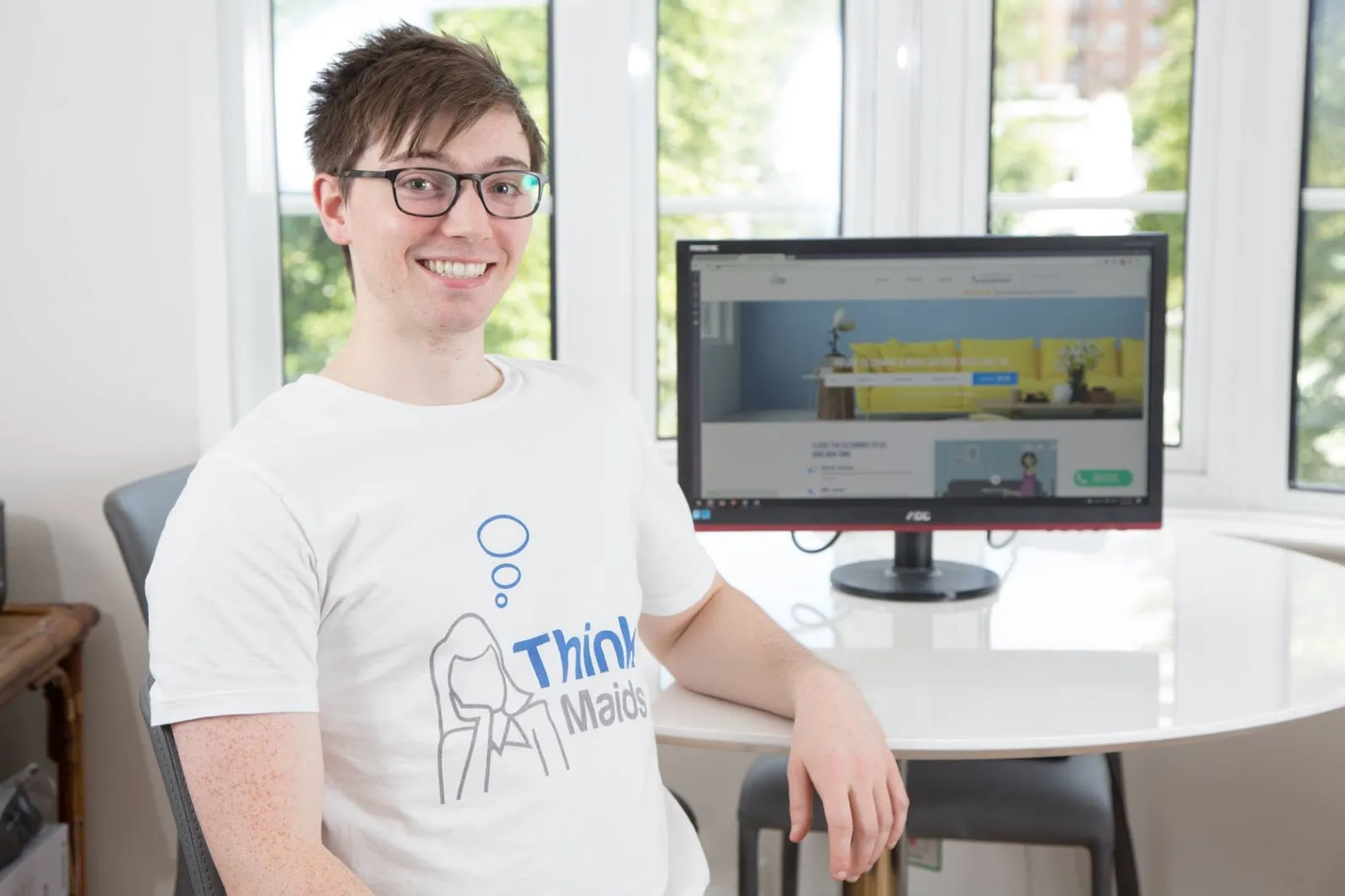
Chris Schwab in a Think Maids t-shirt beside the company’s booking site
Think Maids, run from Japan for eight years.
Who’s teaching this

Why a cleaning founder teaches the business of a trade

Because the business side is the same problem in every local service: answer fast, quote well, follow up, hire people you can rely on, and write it down so it runs without you. I learned it building Think Maids, the first fully remote cleaning company in Washington, D.C., which I ran from Japan for eight years.

Then I founded Inova Local, the first virtual staffing agency dedicated to home services, whose assistants ran the offices of home-service companies from national franchises to Inc. 5000 operators until private equity acquired it in 2025. The Local Business MBA is where all of that is taught, in order.

Featured by Chris Guillebeau on Side Hustle School and in his book 100 Side Hustles, interviewed by Nick Loper of Side Hustle Nation, named one of ZenMaid’s Top 20 cleaning business experts to follow (2025), and a headline speaker at the Maid Summit every year since 2019.

From students

What students across local services sent me

Joel Wall · home services
$6k→$35k
per month · in six months

“Scaled from 6k to 35k in monthly revenue in 6 months. It has been intense over here lol.”

Ian Njogu · cleaning company
$10k→$15.6k
in a month · after five months stuck

“I was stuck at the $10K mark for 5 months but fast forward to January I just had the best month ever for my business. I did $15.6K!!!”

Josh Brown · year two
$1M
on track · started from scratch in 2022

“…I am on track to hit 1,000,000 this year thanks to you.”

Individual results vary and depend on the work you put in. Students shared these with permission. Every review, in full.

Join the MBA

One price for the whole programme

The same programme teaches the business side of every local service, a trade included.

AccessImmediate access to the full programme, all five stages, forever.
Health checksA quarterly business health check through your whole first year.
ChrisDirect access to me by email and in the community.
WorksheetsDigital and printable worksheets with every module.
TemplatesThe template vault: a set for every area of the business, marketing to hiring.
WalkthroughsFull systems and software walkthroughs, tool by tool.
CommunityA private student community.
$2,497
or 6 monthly payments of $499
Join the Local Business MBA

You’ll need stable internet, 5–10 hours a week, and $1,000–$1,500 in startup costs. 30-day withdrawal policy: 50% refund after completing the first three modules and a call with Chris.

Want the detail first? The programme guide sets out every module, the support and the terms.

What tradespeople ask before joining

Do I need my licence before I start?
Check what your trade requires where you work before you take paid jobs. Licensing and certification vary by trade, state and country, and the programme assumes you can do the work legally. It teaches the business around the work.
I want to keep doing the work myself. Is it still for me?
Yes. The stages help you decide what to hand over and when, starting with the office: the phones, the schedule and the invoices, the work that interrupts everything else.
Will it help with pricing and quoting?
Yes. Pricing your services is part of the first stage: the maths of staying profitable from job one. The free pricing guide is a taste of it.
Subcontractors or employees?
The Delegating stage covers both, with a full hiring system from job post to background check. The rules on contractors vary by state and are changing, so take local advice before you decide.
Can a trades business run without me?
More of it than most owners expect: the phones, scheduling, invoices, follow-up and the process parts of hiring can all be handed over. Trades that need a licensed person to quote or sign off work are harder, so for most tradespeople the realistic goal is a business that no longer needs you on every job.
Does it work outside the U.S.?
Yes. The examples are American, but students run local businesses in sixteen-plus countries, from the U.S. to the U.K. The systems, hiring approach and stages carry across borders; only the currency and the rules change.

Free reading before you go independent

Another kind of service? See home services business training.